How to calculate in chess: a method, and two ways to train it
Calculating is not seeing ten moves ahead. It is looking at the right few moves, in the right order, and checking what your opponent can do back. Here is a simple method for it, and the two trainers in Chess Coach that turn it into a habit.
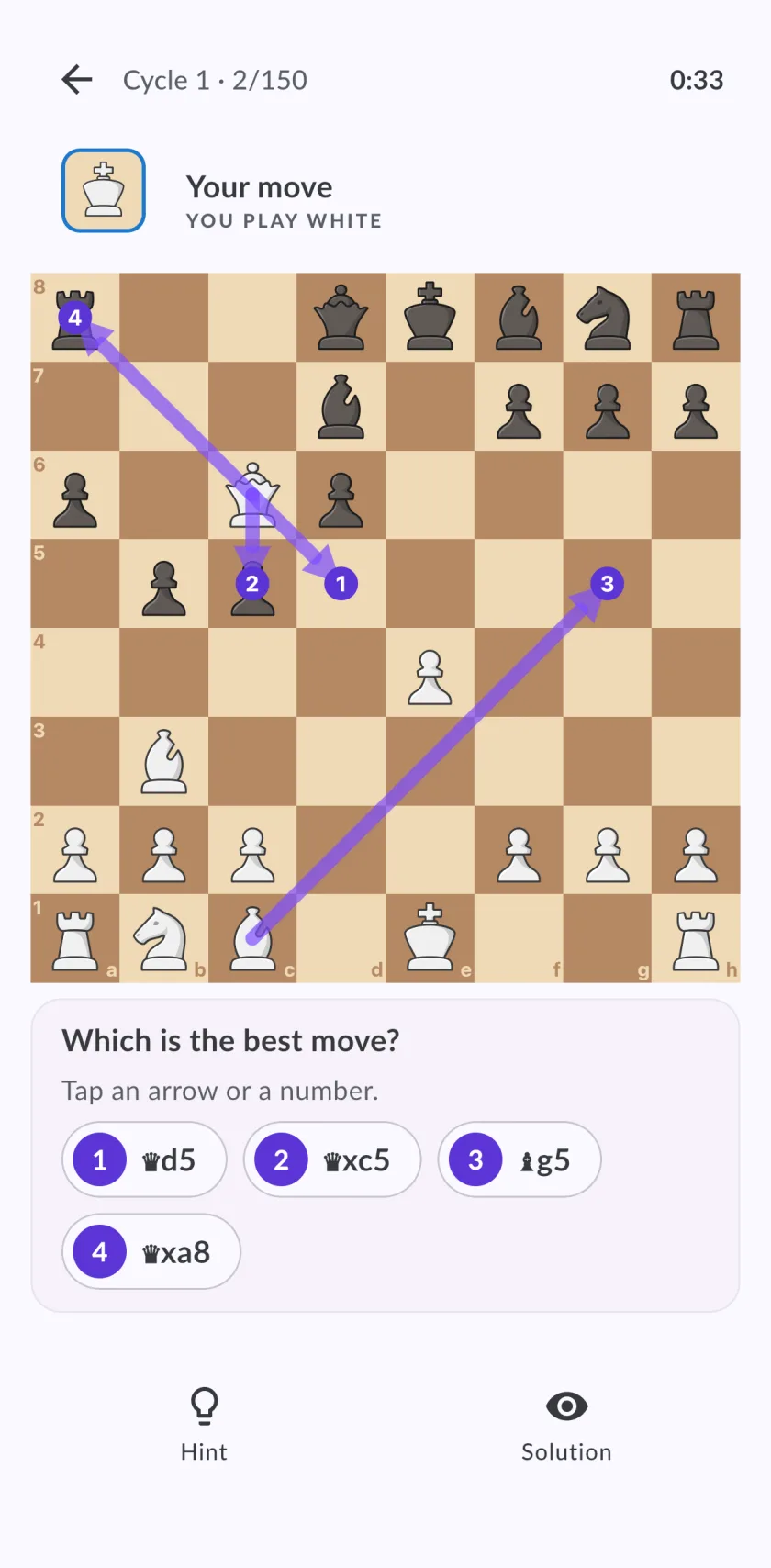
A method for every move that matters
- Read the position first. Who is better, and what does your opponent threaten? Many club blunders come from never asking that question.
- List your candidate moves. Checks, captures and threats first, because they force the reply and are easier to calculate. Then one or two quiet moves that fit the plan.
- Calculate each one to a quiet position. Follow the forcing line until nothing is left to take or check, and judge the position there, not halfway.
- Look for your opponent’s best reply. Before you play, ask what the strongest answer to your move is. If it hurts, go back to the list.
Train it with decisions
The Decision Trainer in Chess Coach walks you through those steps on real positions. Before you move, it can ask who is better, what your opponent threatens or what the plan is. Then you choose your move, and often you also play how your opponent will reply. If your move allows something strong, you have to find it yourself. There are 149 exercises, grouped by theme.
Train it with repetition
The other half of calculation is not needing to calculate: seeing the pattern at a glance. That is what the Woodpecker method trains: the same set of positions, again and again, faster each cycle. In Chess Coach each position shows four candidate moves as arrows; you pick the best one and then play the line that follows.
What is free
Five decision exercises are free, and so are the first ten positions of each Woodpecker set. The rest of the Calculation Lab is part of Premium.
Questions
How can I get better at calculation in chess?
How many moves ahead should I calculate?
What are candidate moves?
Keep training
Take the coach with you
Start free on iPhone, iPad or Android. No ads, and no subscription needed to play, analyse or take the first course.
Sign in and your games, ratings and progress follow you to the other device.
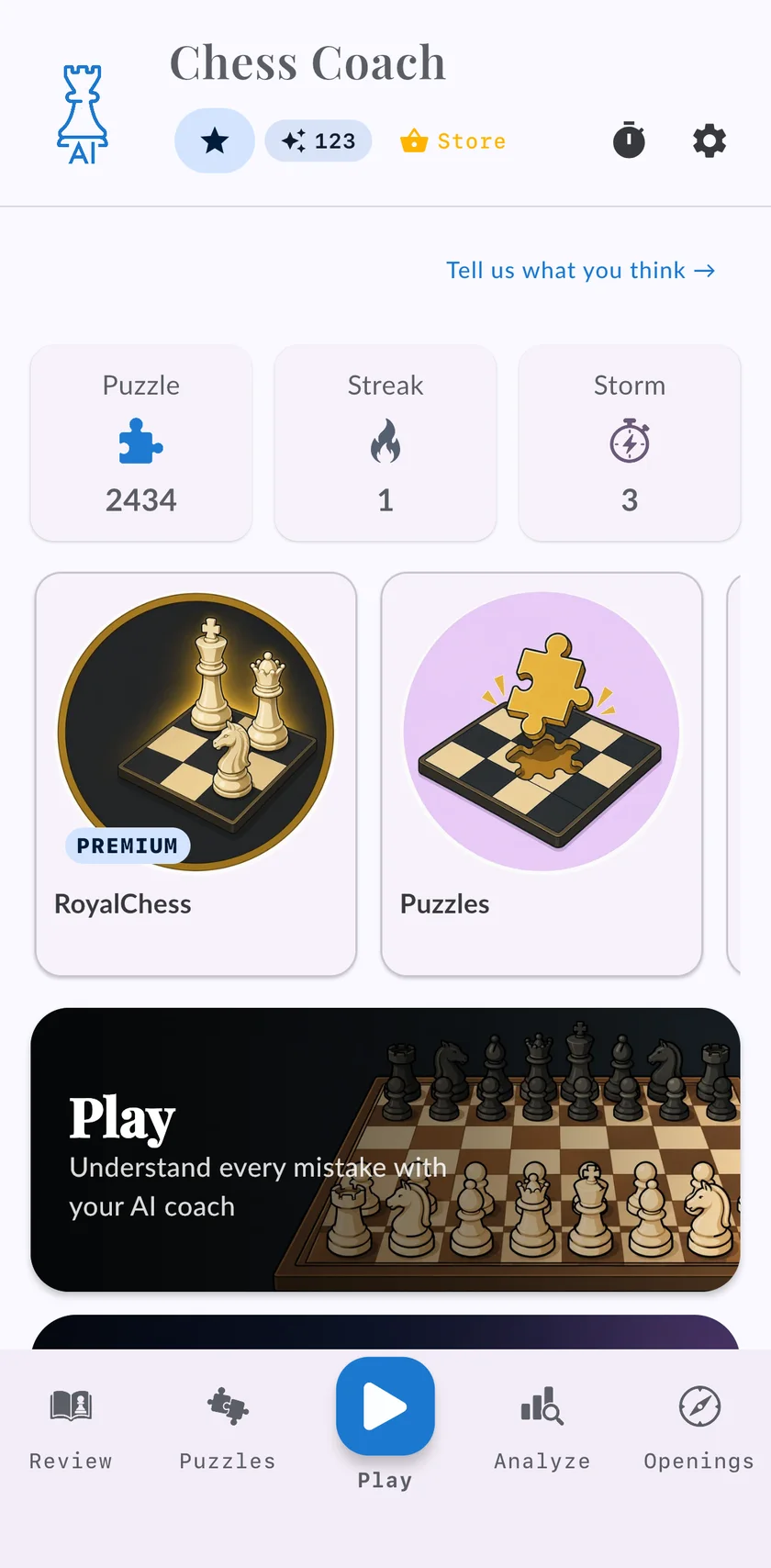
The home screen, on an iPhone. Same app on Android and iPad.