The Woodpecker method: what it is, how to do it, and an app that does the counting
Solve the same set of positions again and again, faster each time, until you see the answers at a glance. That is the whole method. The hard part is sticking to the schedule, and that is the part Chess Coach does for you.
What the Woodpecker method is
The method comes from the book The Woodpecker Method by Axel Smith and Hans Tikkanen. Its idea is simple: you do not get better at spotting tactics by solving thousands of new puzzles once, but by solving the same set many times, until the patterns stop needing calculation.
The book is built around a set of positions and a series of cycles. In each cycle you solve the whole set, and each cycle has to be done in less time than the one before.
The seven cycles
This is the schedule Chess Coach follows. The time you have for each cycle halves, roughly, until the last ones fit into a single day.
| Cycle | Time to solve the whole set |
|---|---|
| 1 | 28 days |
| 2 | 14 days |
| 3 | 7 days |
| 4 | 4 days |
| 5 | 2 days |
| 6 | 1 day |
| 7 | 1 day |
How to do it
- Pick one set and stay with it. Changing positions halfway defeats the method: the point is to see the same ones again.
- Solve every position in the cycle. Decide the move, then check. Do not skip the ones you find easy; the speed comes from them.
- Take a day off between cycles. The rest is part of the method, not a reward.
- Go again, in half the time. The positions you missed are the ones worth the most attention.
How Chess Coach runs it for you
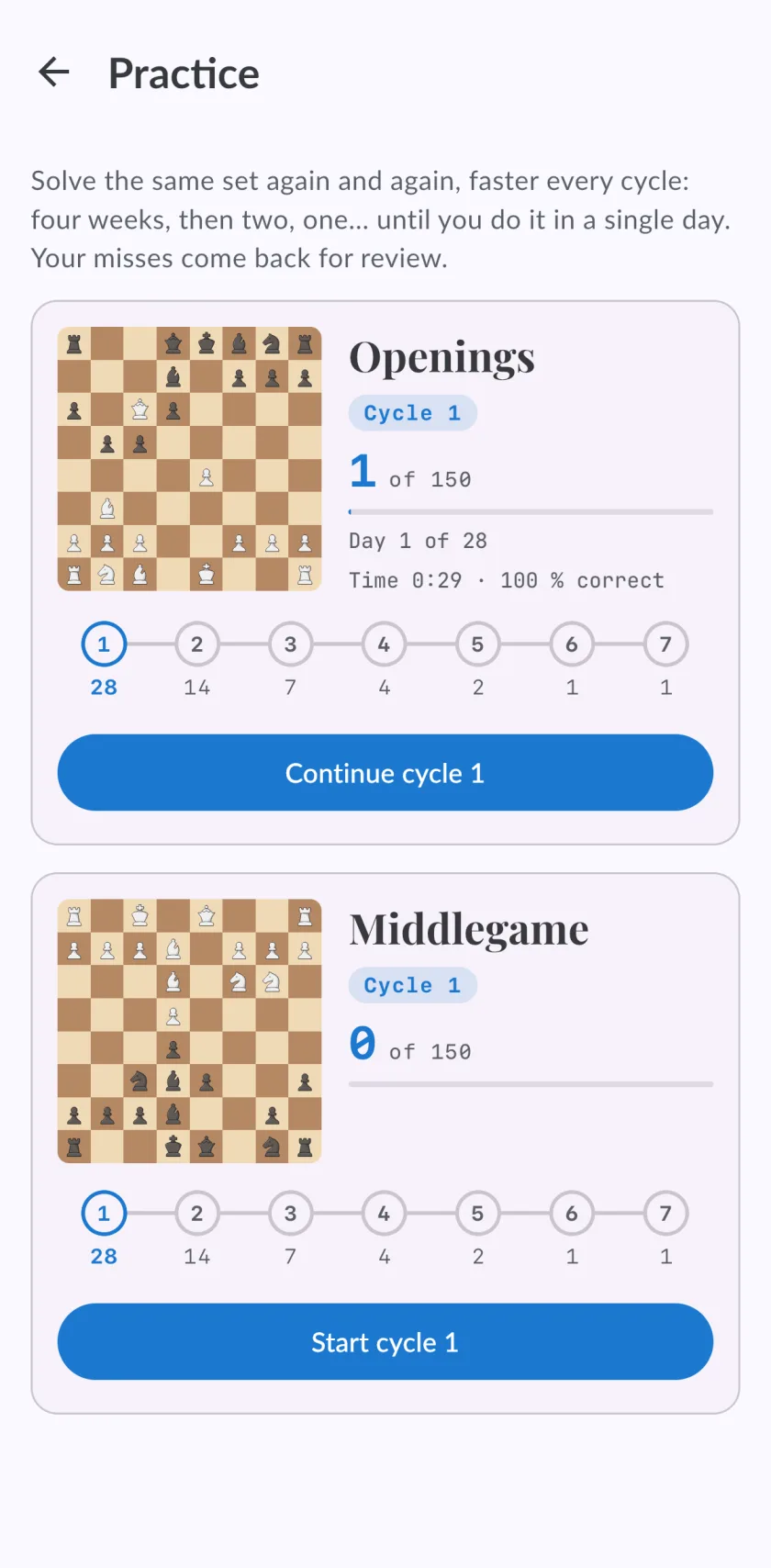
In the Calculation Lab, Practice is the Woodpecker method with the bookkeeping done:
- Two sets of 150 positions, one from the opening and one from the middlegame, chosen and checked with an engine.
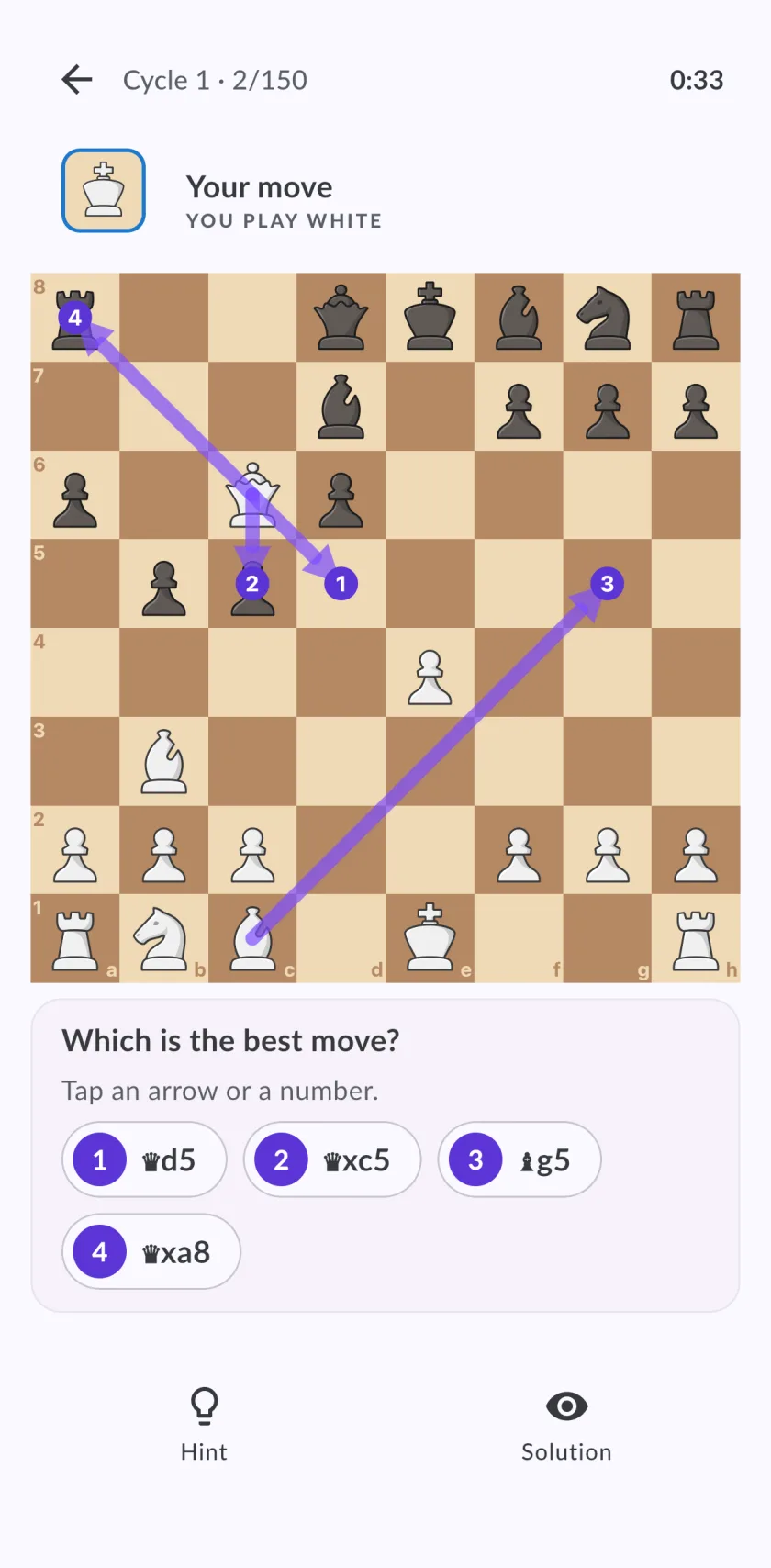
- Four arrows, one best move. Each position shows four candidate moves: the best one, two believable ones that lose ground and one clear mistake. You pick one, then play the line that follows, five moves deep.
- The cycles are kept for you: which day of which cycle you are on, your time and how many you solved.
- Misses come back. A position you got wrong, or solved with a hint, comes back the next day, then at growing intervals until you get it right.
What is free
The first ten positions of each set are free, so you can try the method before deciding. The full sets and their cycles are part of Premium.
Questions
Does the Woodpecker method work?
How many positions should a Woodpecker set have?
The Woodpecker method is too hard. What can I do?
Can I do it on my phone?
Keep training
Take the coach with you
Start free on iPhone, iPad or Android. No ads, and no subscription needed to play, analyse or take the first course.
Sign in and your games, ratings and progress follow you to the other device.
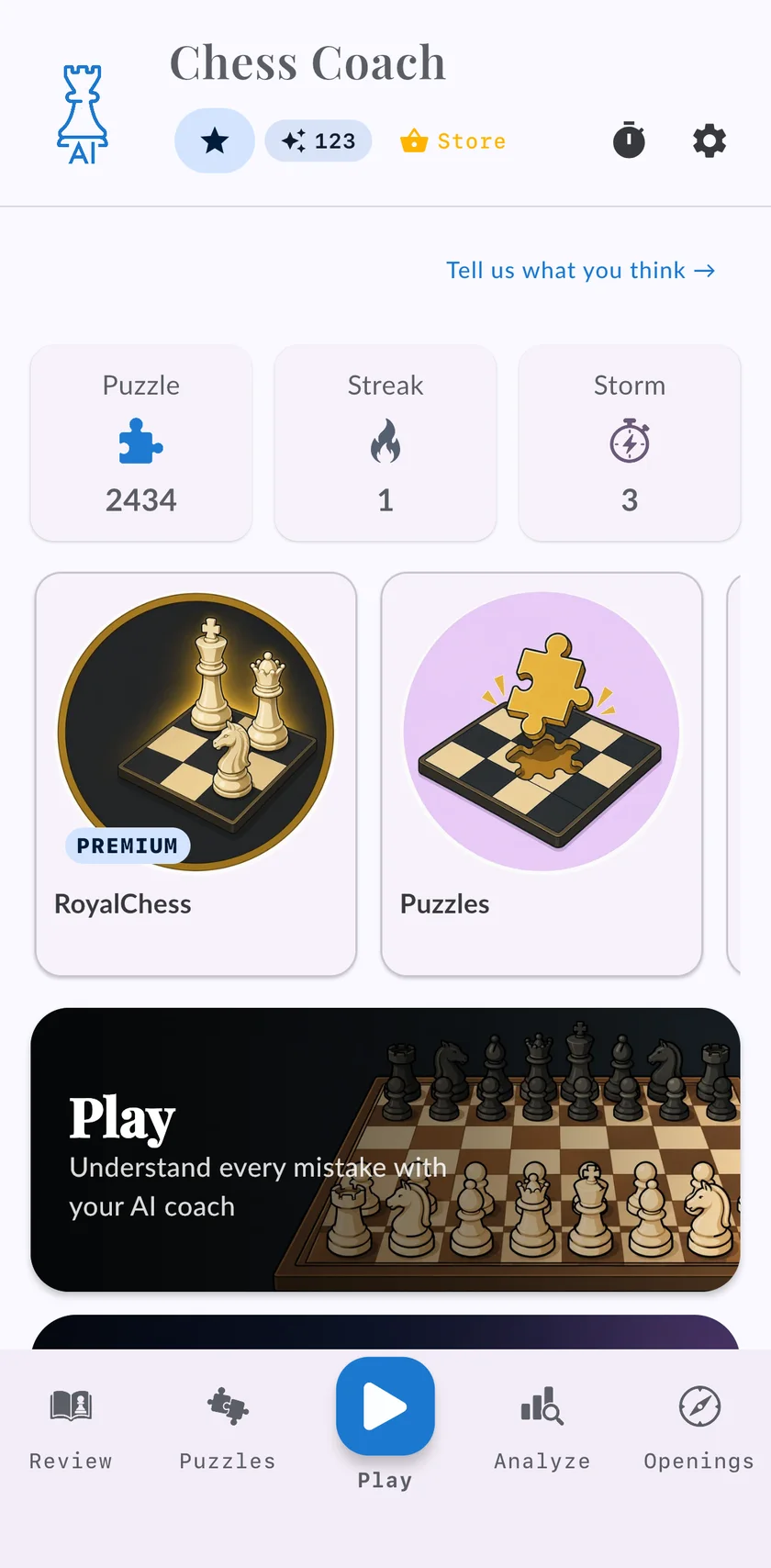
The home screen, on an iPhone. Same app on Android and iPad.